 Kid Doodle
Kindergarten readiness isn't flashcards — it's a bundle of quiet skills: holding a pencil, following a task to completion, sitting with focus, knowing colors, and believing "I can do this." Coloring games hit every one of them, disguised as fun.
The five skills, and how coloring trains each one
- Pencil control. Every stroke toward a boundary is pre-writing practice. Kid Doodle's pencils and crayons demand the same controlled movements that will later form letters.
- Sustained focus. A coloring page is a naturally bounded task — long enough to stretch attention, short enough to finish. Attention grows by finishing things, not by being told to focus.
- Task completion. The narrator's celebration when a page is done reinforces the finish-what-you-start habit teachers prize.
- Color knowledge. The narrator names every color at the moment of choice — by kindergarten, color names are automatic.
- Independence. Because no reading is needed, preschoolers run the whole activity solo — choosing, executing, finishing. That "I did it myself" is the confidence kindergarten runs on.
Themed books = built-in curriculum
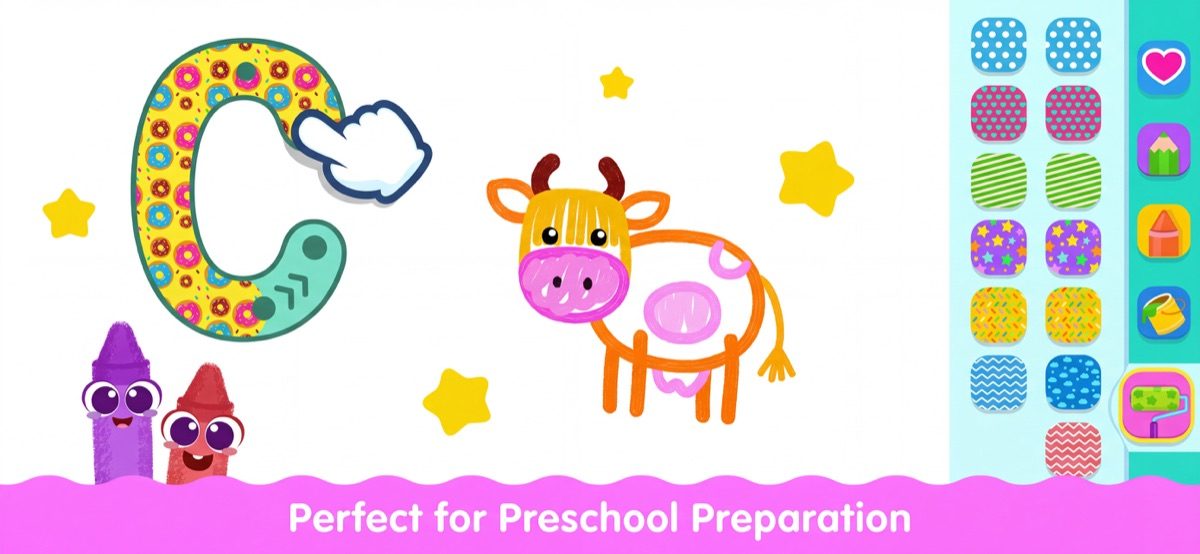
Kid Doodle's 13+ themed books double as vocabulary units: animals, ocean, space, vehicles, seasons, school, music, dinosaurs, princesses, robots, fruits, Christmas and Halloween. A week of ocean pages is a week of ocean words. The school-themed book is a gentle way to make classrooms feel familiar and exciting before the first day.
A realistic screen-time frame for ages 4–5
Pediatric guidance for this age emphasizes quality over minutes: creative, interactive use beats passive watching. A 20-minute coloring session where a child chooses, executes and completes is exactly the "high-quality screen time" the guidelines mean. Kid Doodle has no autoplay, no feeds and no reward loops pulling kids to stay — a page ends, and it's a natural stopping point.
A weekly school-prep routine with Kid Doodle
- Monday–Tuesday: one theme (say, animals) — two pages a day, narrator on, colors named out loud together.
- Wednesday: free drawing on blank canvas — ask them to draw "something from today."
- Thursday: precision day — small areas with the colored pencil, "all the way to the edges."
- Friday: their choice, full independence — pick the book, finish the page, save it, show the family.
- Weekend: paper crayons; watch the app practice show up in real pencil grip.
Frequently asked questions
Are coloring apps educational for preschoolers?
Yes, when they demand real strokes and completion rather than passive watching. Coloring builds pencil control, focus, color knowledge and task completion — the core of kindergarten readiness.
How much screen time is OK for a 4-year-old?
Pediatric guidance emphasizes quality and context over exact minutes: creative, interactive sessions with clear endpoints (like finishing a coloring page) are the good kind. Kid Doodle has no autoplay or feeds, so sessions end naturally.