 Kid Doodle
Before a child can write their name, their hands need hundreds of hours of practice in control, pressure and precision. Coloring is one of the most effective — and most joyful — ways to log those hours. Here's what's actually developing while your child colors, and where an app fits alongside paper.
What's developing, age by age
- Age 2: whole-arm scribbling, palm grip, cause-and-effect ("I move, marks appear"). Tap-to-fill coloring adds color recognition without demanding control that isn't there yet.
- Age 3: wrist movement separates from the arm; circles and deliberate lines appear; grip migrates toward the fingers.
- Age 4: staying inside the lines becomes possible — this is hand-eye coordination visibly maturing. Pressure control (light vs. heavy strokes) develops.
- Ages 5–6: tripod grip stabilizes, small precise strokes fill small areas, and the same muscles start forming letters. Coloring stamina converts directly into handwriting stamina.
Screen coloring and paper coloring: teammates, not rivals
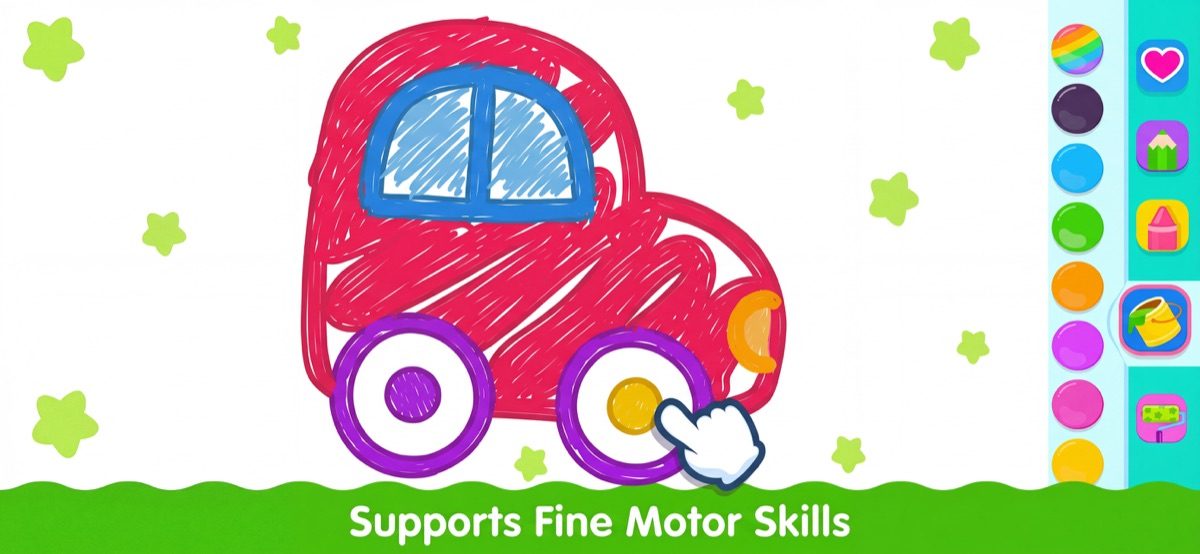
Paper builds pressure feedback and tool handling; a good coloring app builds precision, color knowledge and confidence — and it's there in the restaurant when crayons aren't. The key is that the app demands real strokes: Kid Doodle's crayons, brushes and pencils require the same guided, boundary-respecting movements as their physical versions, so practice transfers. The press-and-hold coloring and tap-and-paint sounds give the sensory feedback loop that keeps young hands engaged.
What the narrator adds (and why it matters)
Kid Doodle's narrator names every color as your child selects it — so alongside motor practice, kids absorb color vocabulary the way they learn all words: hearing them at the exact moment of use. Finishing a page earns a celebration, which reinforces task completion — a school-readiness skill that's easy to overlook and hard to teach directly.
A fine-motor coloring routine in Kid Doodle
- Warm up with the fill bucket (30 seconds of easy wins and color names).
- Switch to the crayon and encourage coloring one area "all the way to the edges" — that's boundary control practice.
- Try the colored pencil for smaller areas — smaller tool, finer control.
- Finish the page. Resist the urge to move on early; completing it is the focus-building part.
- Mirror it on paper once a week with real crayons — the skills flow both directions.
Frequently asked questions
Is coloring on a tablet as good as coloring on paper?
They build overlapping but different skills — paper adds pressure feedback and tool handling; an app adds precision practice, color vocabulary and frustration-free repetition. Occupational therapists generally recommend both.
At what age should kids start coloring?
From about age 2 with adult-free tools like tap-to-fill, moving to freehand coloring around 3. Kid Doodle spans that whole arc, ages 2–6, in one app.